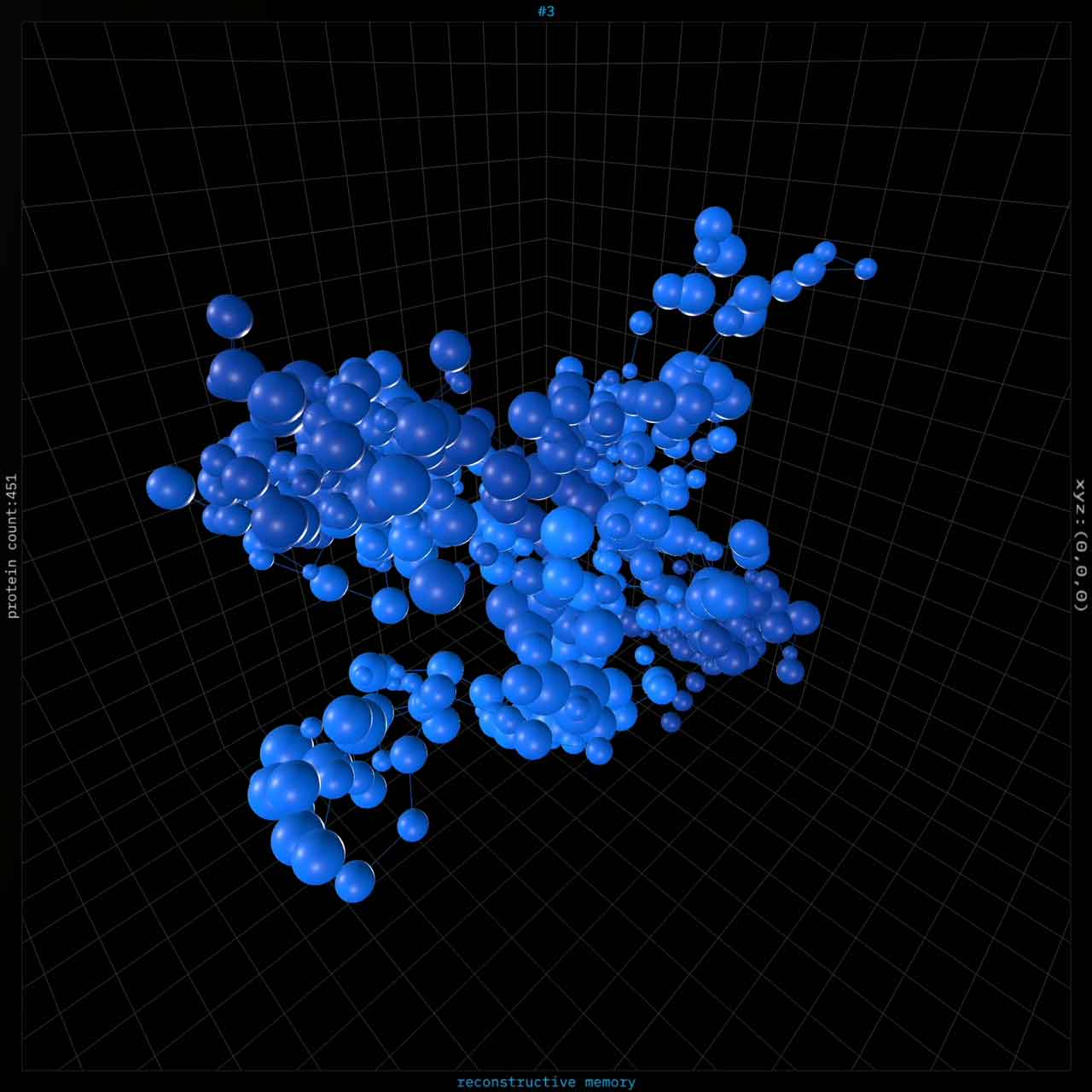
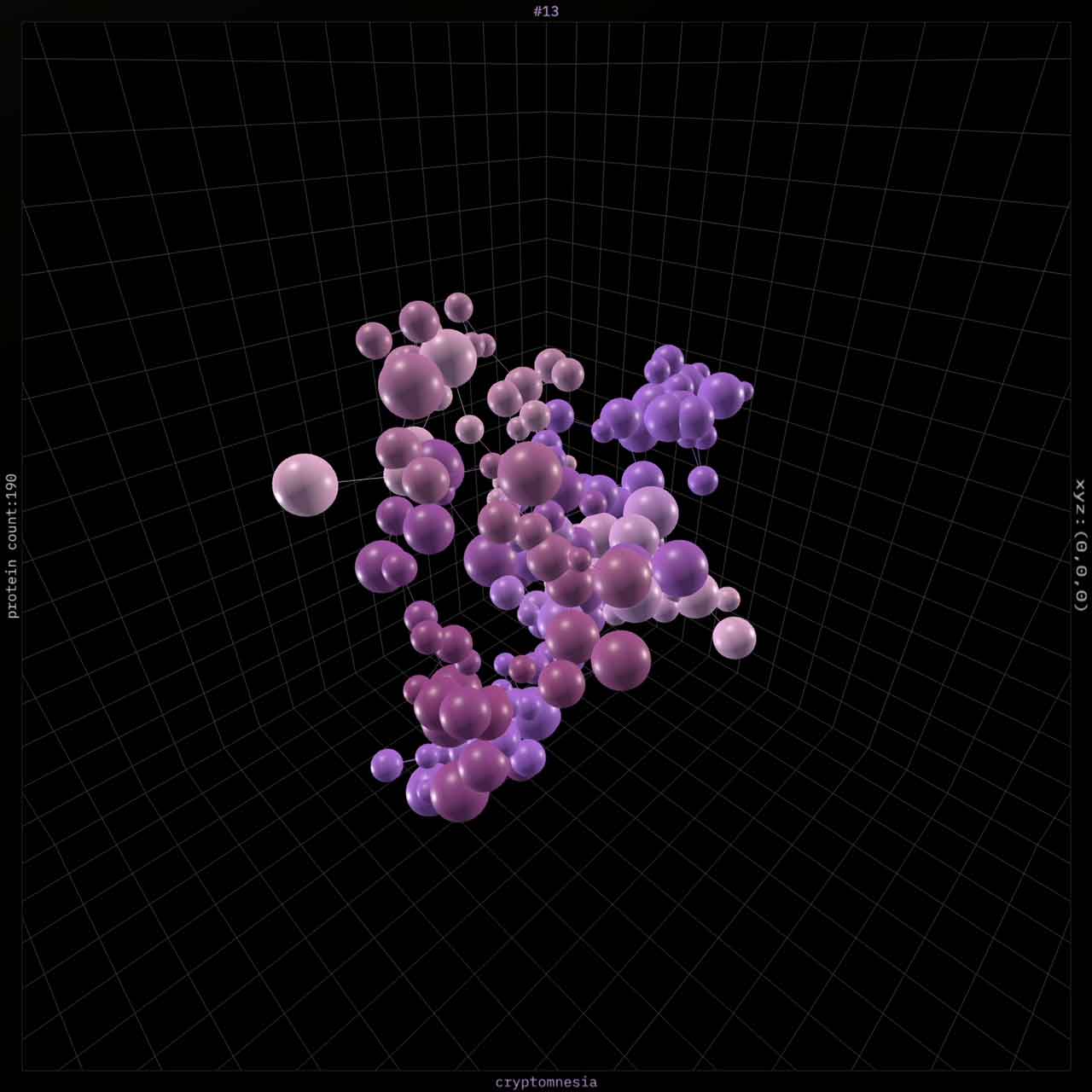
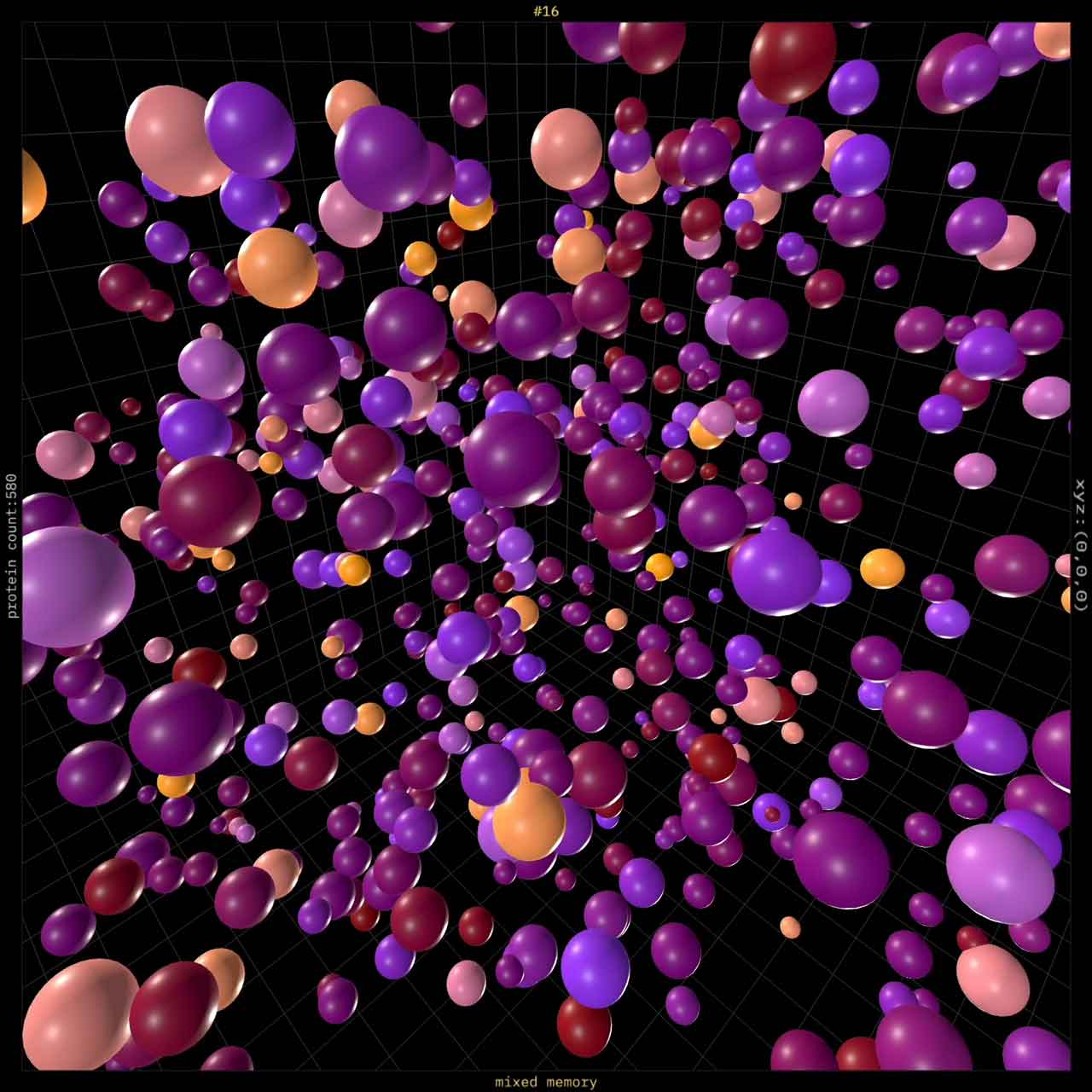
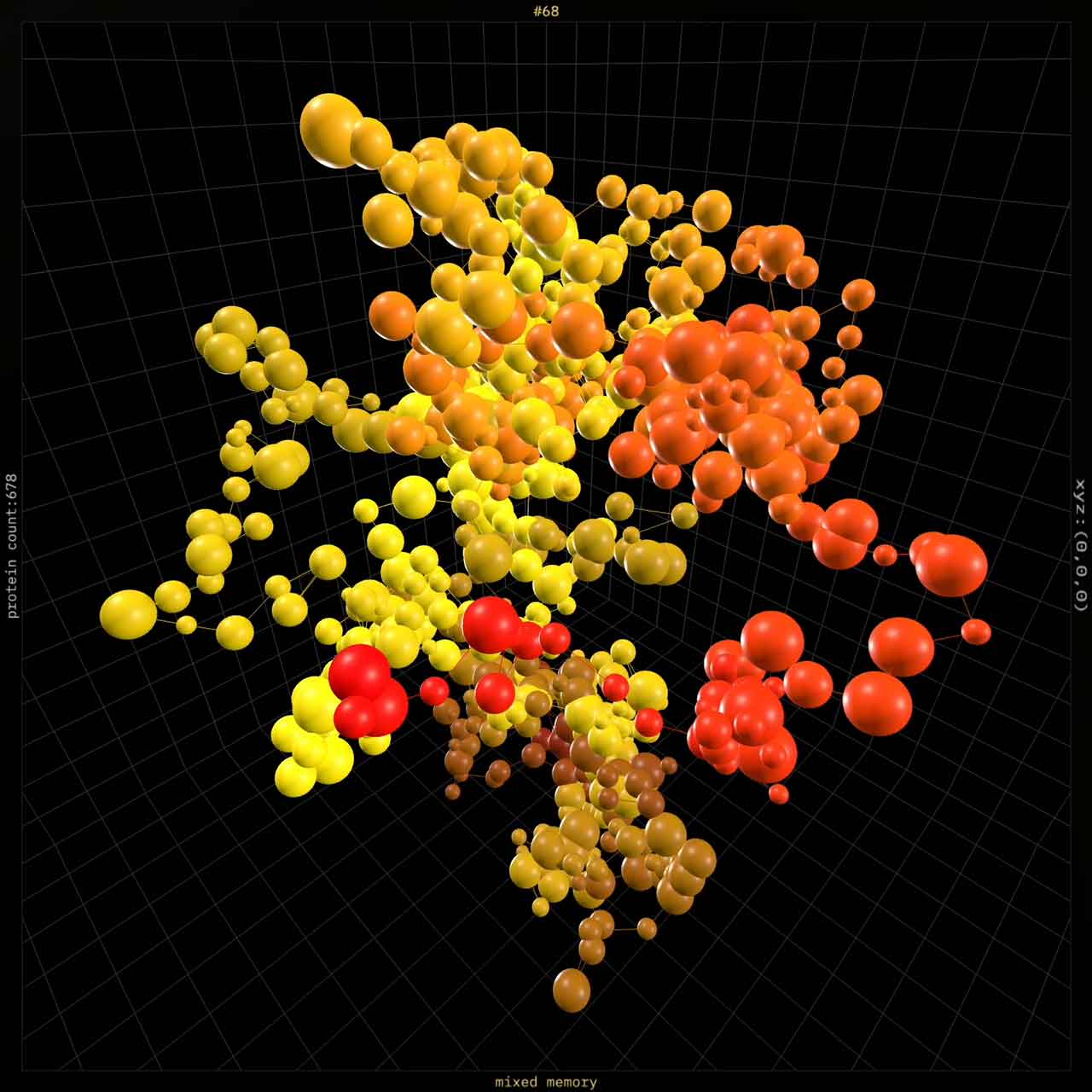
“if we are made of our memories, memory becomes an art; else, all that is left of us is nothing.”
if (madeOfMemories) {
    // code here runs when madeOfMemories evaluates to true
    memoryBecomesArt();
} else {
    // code here runs when madeOfMemories is false
    allThatIsLeftOfUsIsNothing();
}
abstract
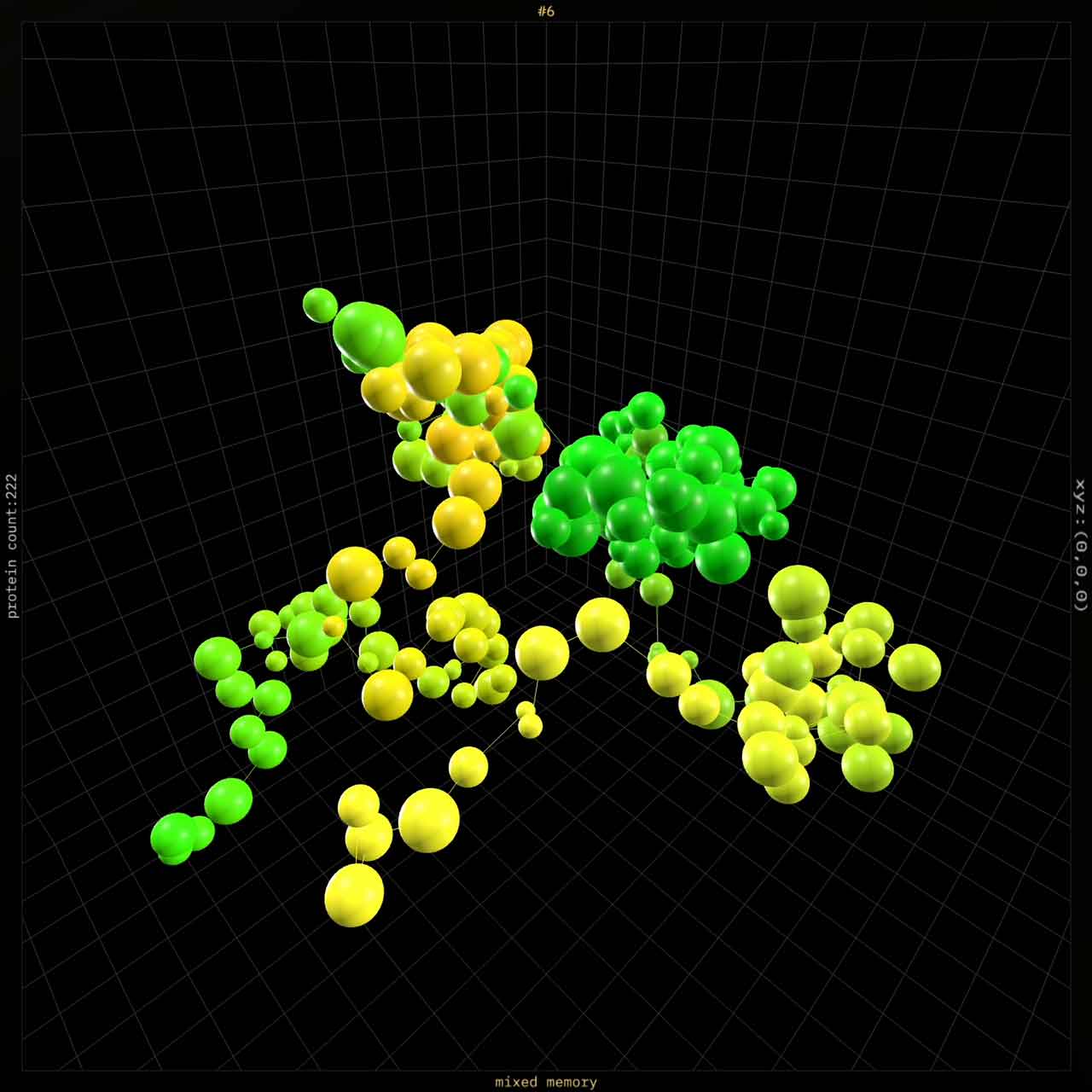
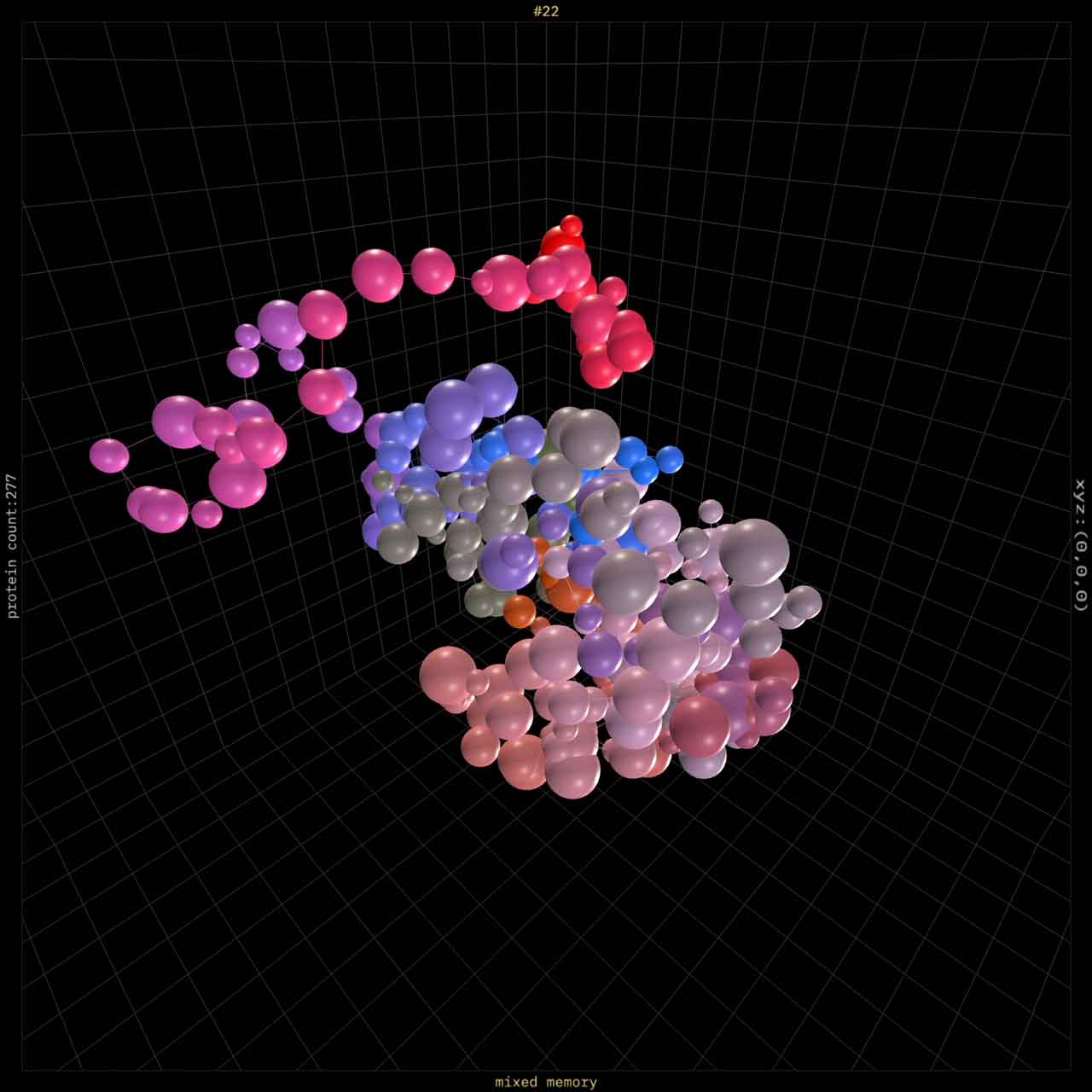
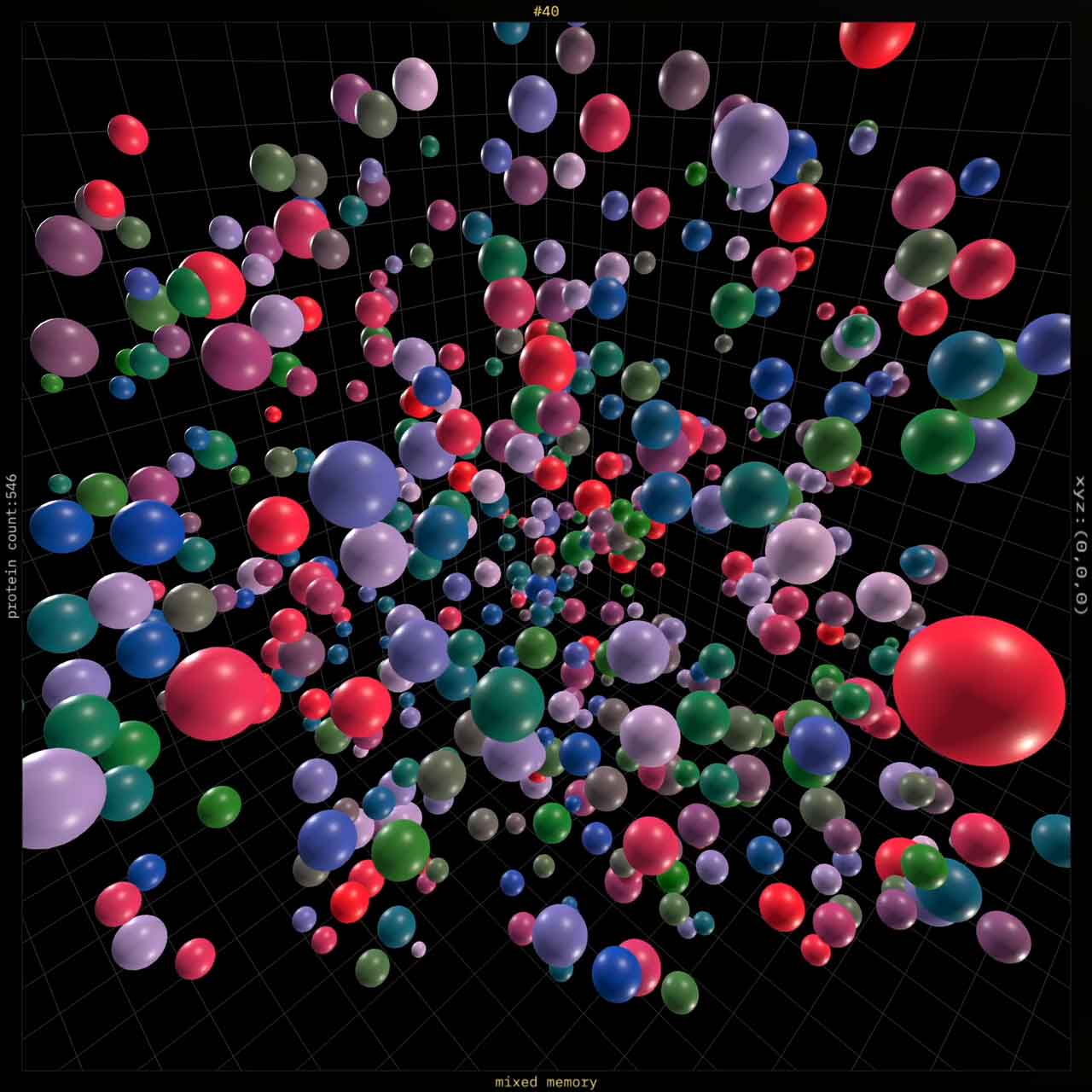
“memorotein” is an interactive collection generated by a digital code based on javascript, combining the biological formation of memory proteins, protein models, the psychological connection of memories with colors, and contemporary algorithms. it creates generative memory protein forms from infinite possibilities, continually evolving designs, and is digitalized in the form of a unique collection of 620 NFTs. developed by hazelrah, the algorithm ensures the creation of new artwork with each iteration. the resulting artwork integrates the complex formation of memories, composed of thousands of different memory proteins, with a biological and psychological infrastructure, incorporating it into the contemporary technology of our automation era.
introduction
“memorotein” artistically conveys the mysteries of memories hidden within the human brain’s labyrinth. the project aims to visually and interactively represent the biological foundations and psychological interactions of memories, along with their complex structure and the dynamics within the mind. each artwork in this collection promises a unique experience, symbolically representing the formation processes of memory proteins in the brain. the depiction of protein molecules aesthetically narrates the formation and storage of memories on a scientific foundation.
art concept
the “memorotein” project is developed using a three.js library-based algorithm. (1) this algorithm determines the random movements and visual structure of the spheres, each processed as an independent object according to object-oriented programming principles.
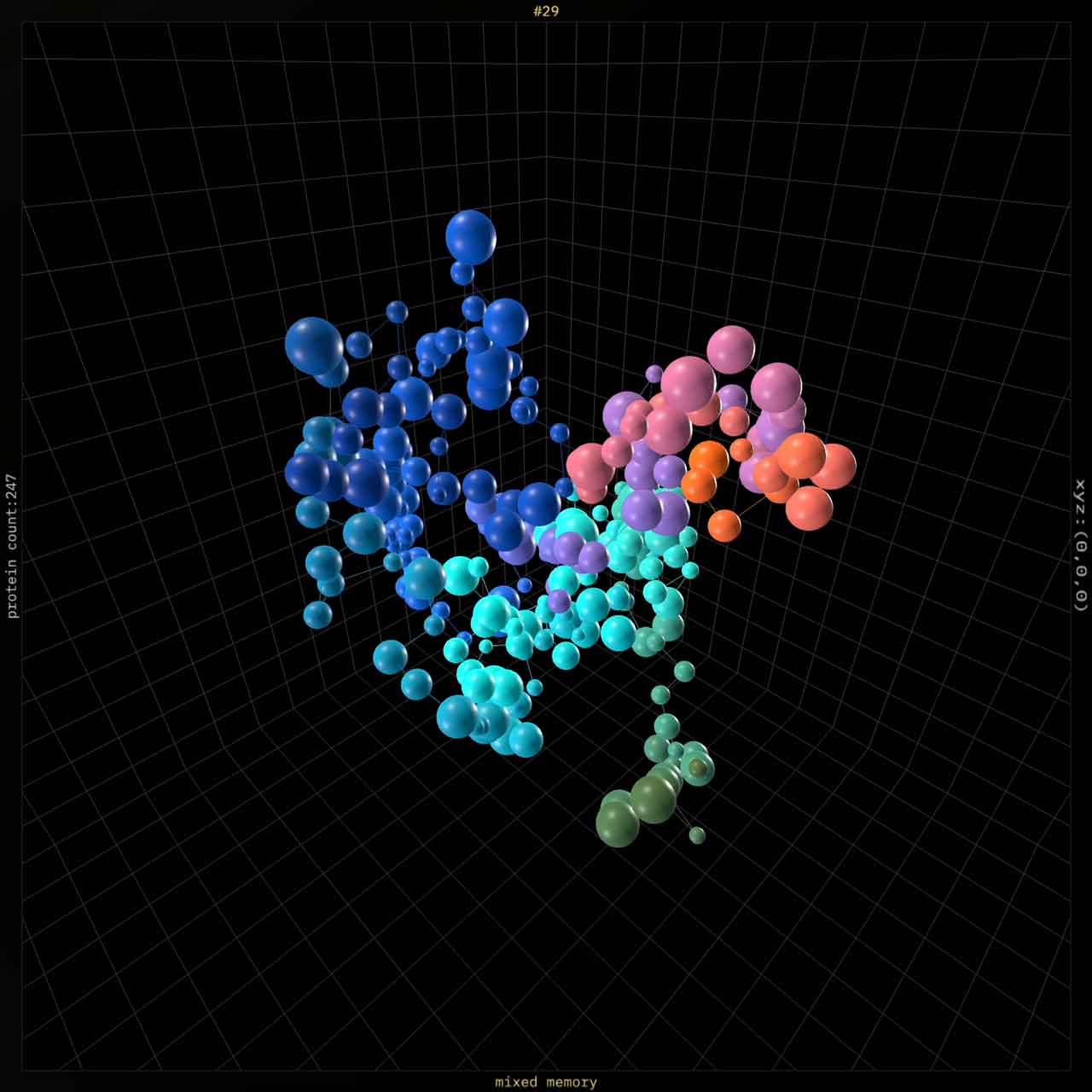
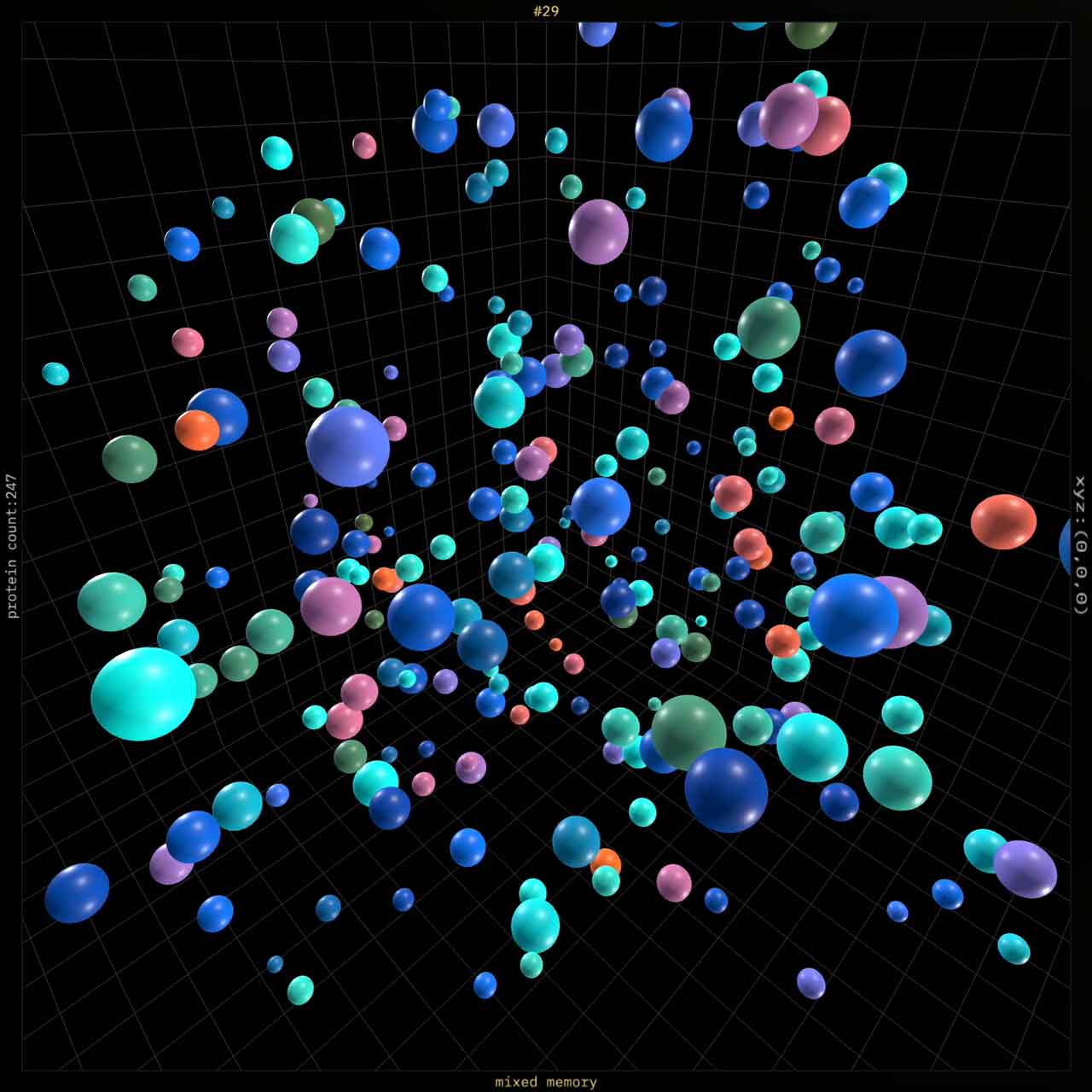
the project artistically addresses these scientific findings, exploring how memories are formed and stored in the brain through the artistic visualization of protein molecules. the project’s interactive nature allows viewers to establish a connection between memories and their visual representations. this interaction, through clicking or touching, causes the memory protein form molecules on the screen to disperse into a distributed structure, representing the scattered storage of our memories and the reassembly of related proteins each time we recall a memory. (2)
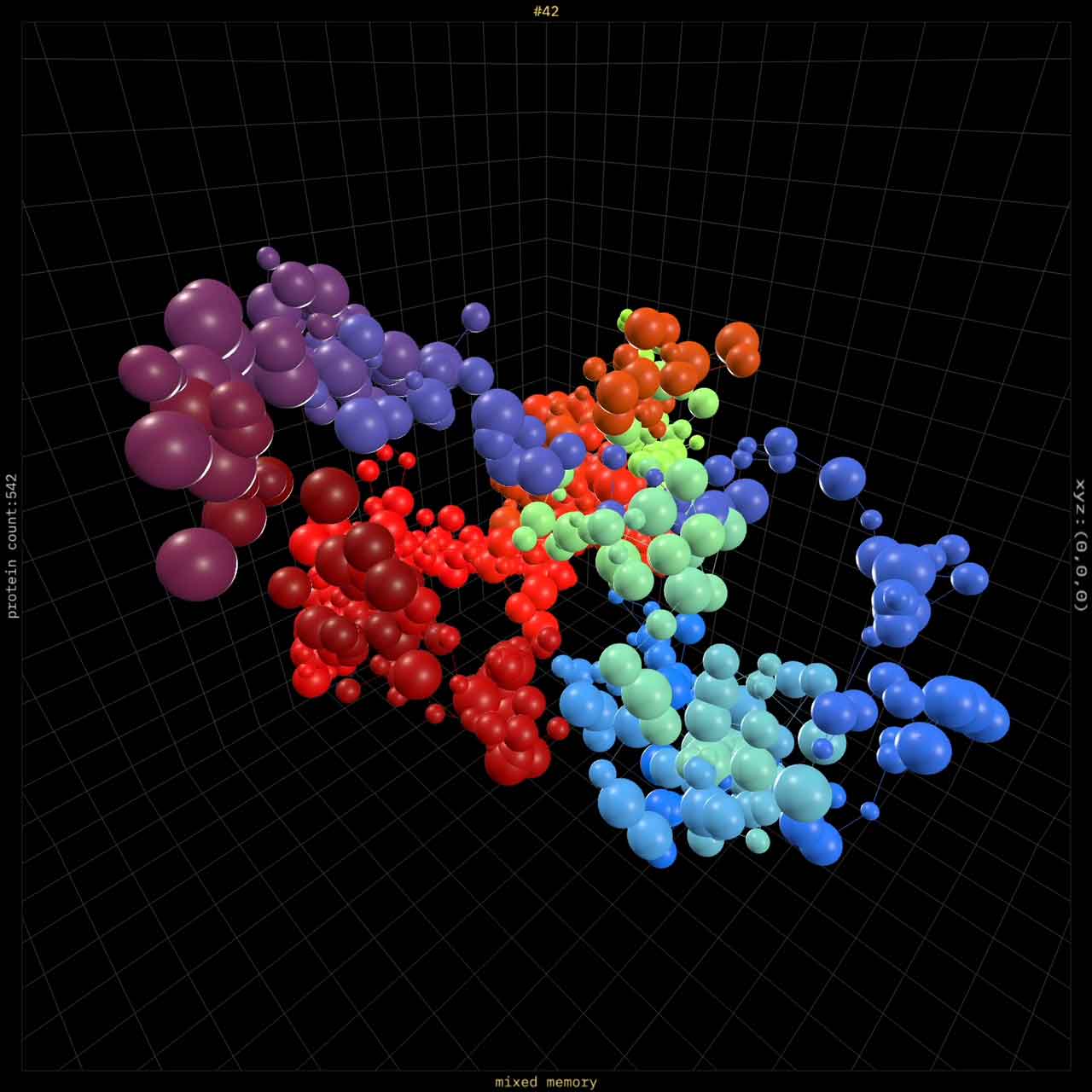
the project is grounded in scientific research focused on memories and protein synthesis. utilizing the three.js library, the algorithm is crafted, with each sphere built upon a 3D model that represents memory proteins. the code, designed based on object-oriented programming principles, processes each sphere as an independent object. these spheres form a structure with random movements, influenced by the brownian motion theory discovered by robert brown in 1827, and are adorned with colors representing various types of memories. (3)
brownian motion signifies the continuous fluctuating path of a particle undergoing random movements. the phenomenon describes the movement of microscopic particles in a liquid influenced by random collisions. such a motion type results from the random impacts of liquid molecules surrounding the particle. unlike distinct motion in one direction, it portrays a situation where the particle follows a random zigzag pattern. the explanation lies in the thermal motion and collisions at the molecular level. brownian motion holds significant relevance across various fields, including physics, chemistry, and biology, where mathematical models are employed to understand and predict the behavior of randomly moving particles.
biological aspects
recent research on how memories are stored in the brain indicates that they are not confined to one or a few locations but are spread across a wide and interconnected network. (4) a study at the picower institute of MIT found that memories, known as “engrams” – groups of neurons that encode a memory – are distributed in various regions of the brain, not just in known memory areas. (5)
furthermore, the formation and storage of memories in the brain are based on the mechanism of proteins and their synthesis. another study by weifeng xu and her team at the picower institute for learning and memory at MIT showed that protein production during the formation of new memories is rapid yet temporary. blocking protein production in mice’s brains temporarily affected memory formation when they were introduced to a new environment, underscoring the importance of protein production during memory formation.
these findings indicate that memories are not only stored in the hippocampus or cortex but also in numerous other regions of the brain. researchers examining over 247 regions in mice’s brains identified cells active during memory encoding and recall. they also found that memory recall is stronger when multiple memory storage areas are reactivated. this suggests that distributed storage of memories could make them more efficient and resilient. (6)
these research findings inspire the interactive structure of memory proteins visualized in the “memorotein” project. when a user clicks with the right mouse button or touches the screen on a mobile device, the memory protein molecules on the screen disperse, forming a distributed structure. this represents how our memories are stored in a distributed manner and how the proteins related to a memory come together to recreate it each time we recall it.
interactive features present the results of scientific research as a visual and interactive art piece, creating an innovative experience at the intersection of science and art.
color concept
there is a total of 12 color palettes specially prepared for the theme, and a color bank consisting of a total of 66 colors.
each color represents a specific type of memory, and these colors enhance the visual diversity and emotional depth of the work. the distribution and meanings of the colors are as follows:
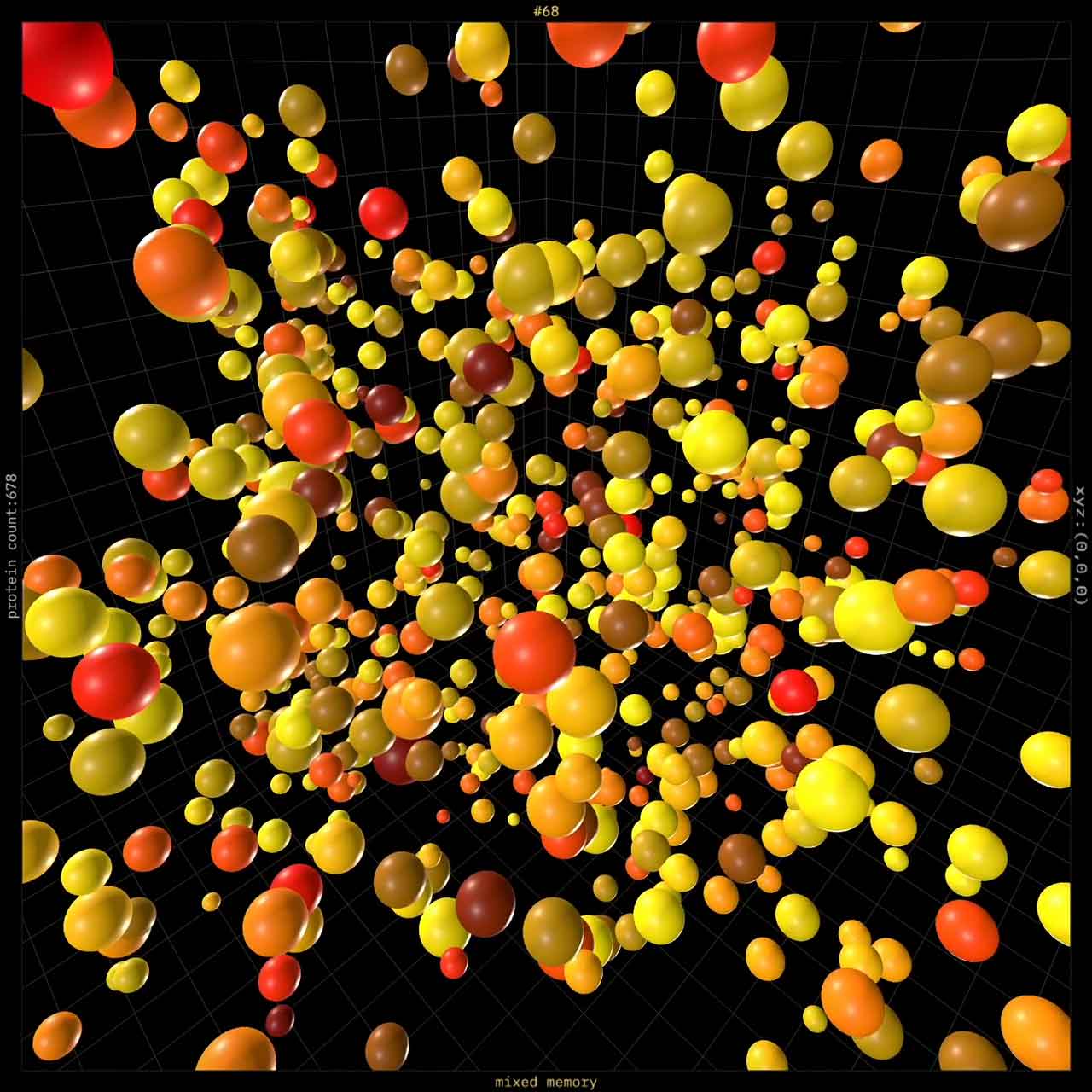
analogous color palettes consisting of 5 colors each are prepared harmoniously both among themselves and within themselves for red, green, blue, orange, yellow, and purple colors. only 18% of the collection in total is rare, and these color palettes use only one of these colors and carry the triad of the type of memory that color represents.
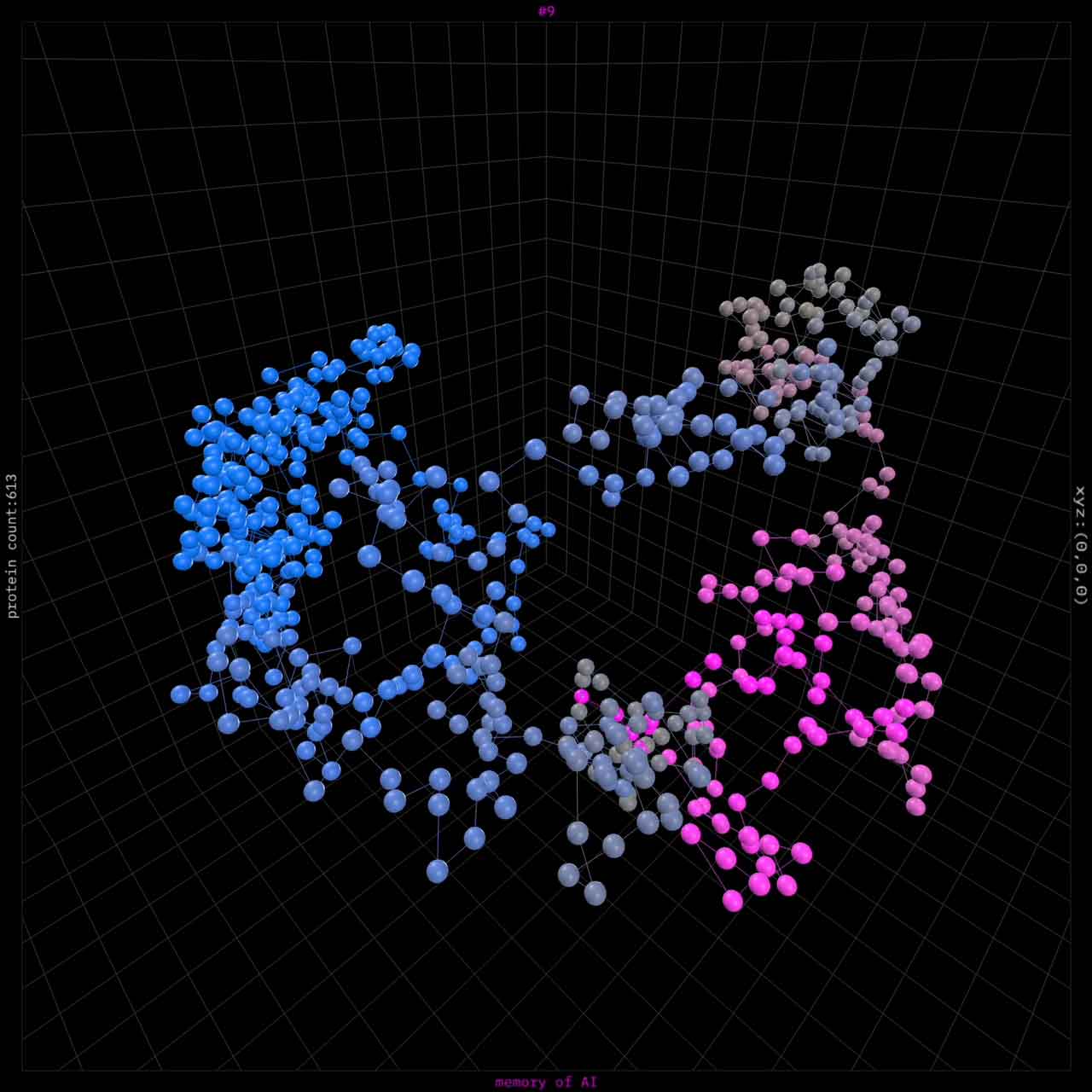
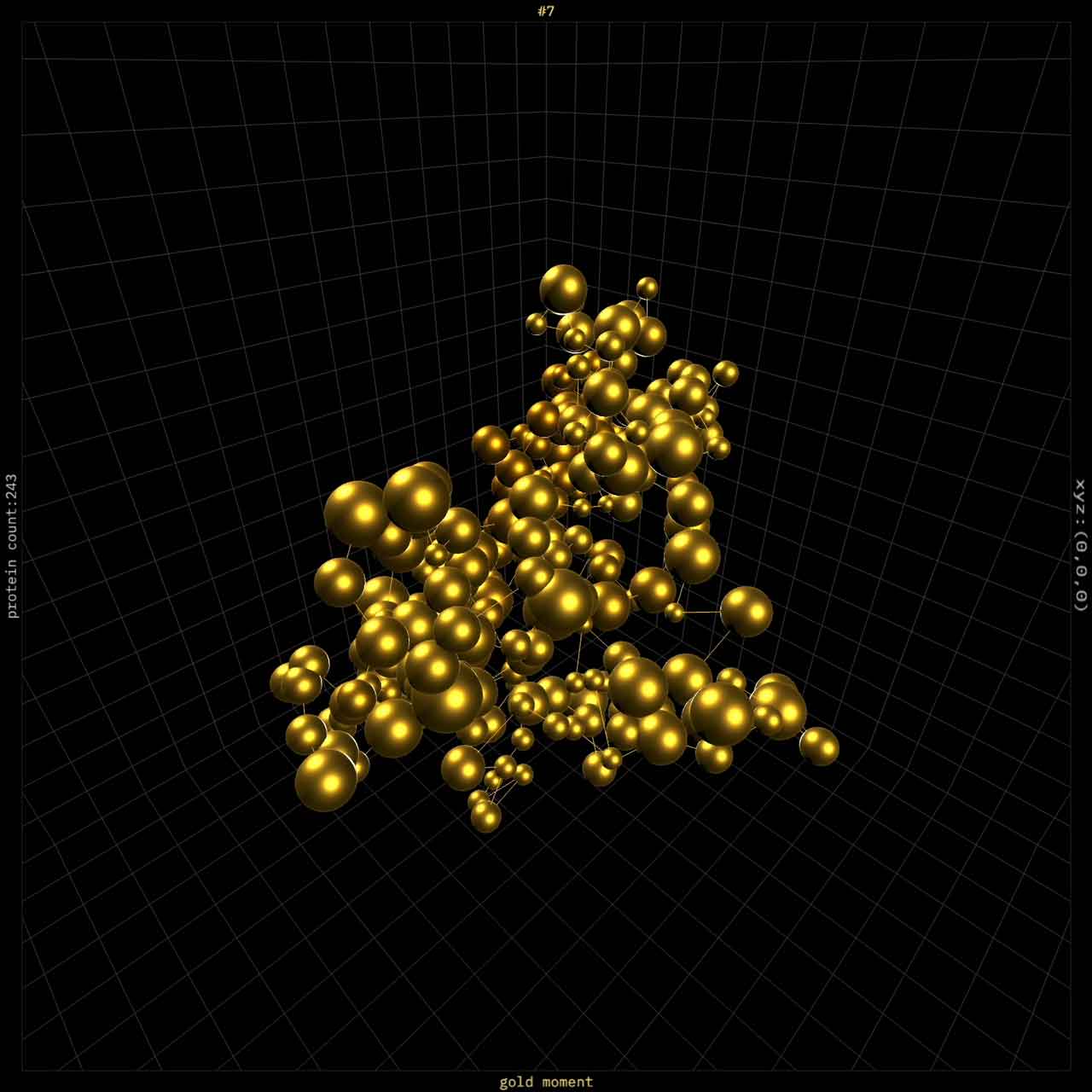
6% of the pieces in the collection are in the legendary category, while using 5 colors of special color palettes for silver (gray), gold, and AI pieces; cocaine, weed (cannabis), and acid (LSD) pieces also use 7-color palettes specific to each of them.
at the same time, the effects of substance use on memory are also included in the “memorotein” project. the project explores the impact of substances such as LSD (acid), cocaine, and marijuana on memory processes, supported by scientific research.
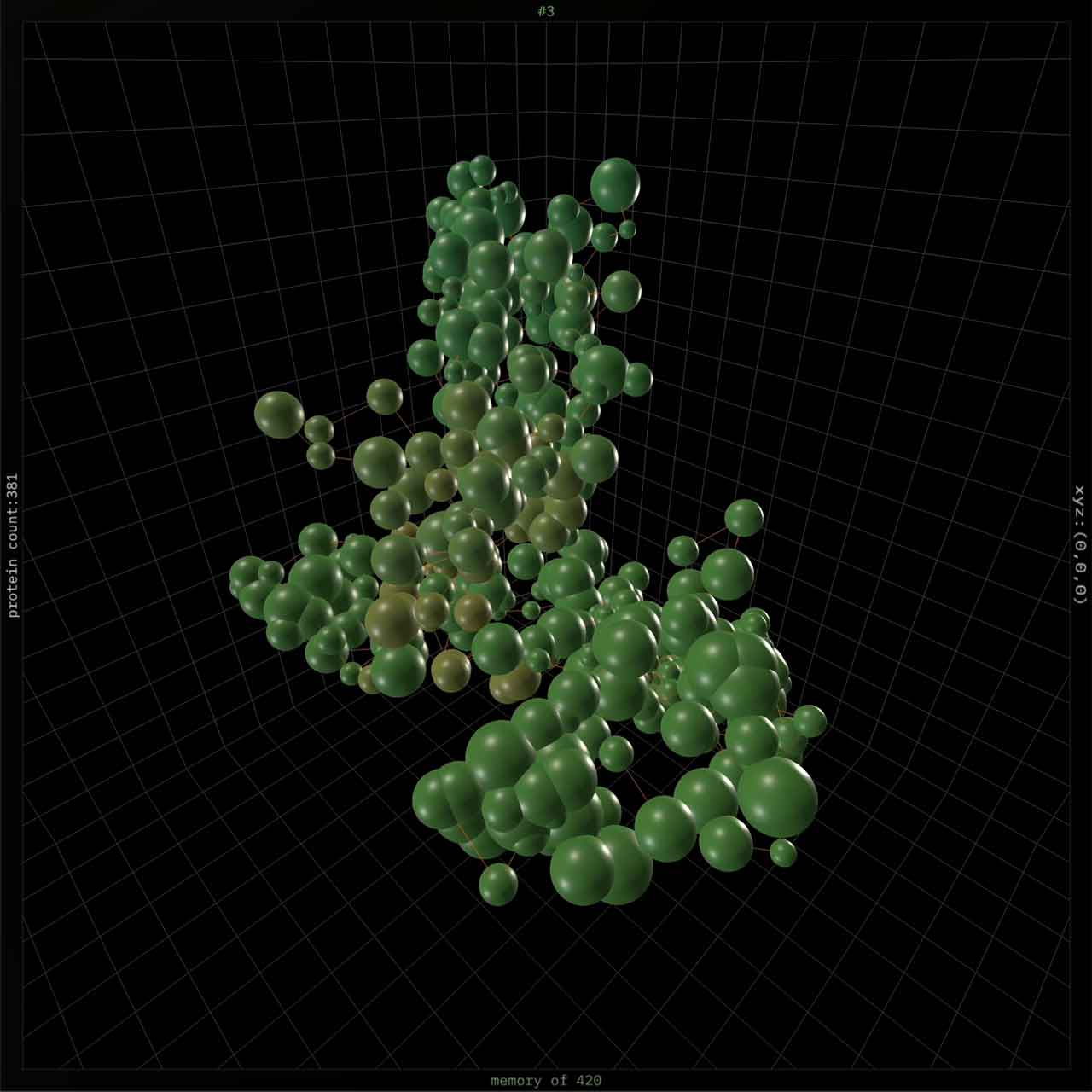
for example, it has been noted that cannabis use has negative effects on memory processes, especially in adolescents. the slowing of brain function by cannabis, particularly becoming more pronounced in the aging process, provides a basis for visualizing the effects of this substance on memories in the project. the long-term effects of cannabis use on memory and cognitive functions are represented by the green-colored spheres within “memorotein,” allowing viewers to contemplate this topic. (7)
the effects of LSD (acid) and cocaine on memory are similarly complex. it is known that LSD affects processes related to emotional and procedural memory, involving brain structures such as the amygdala and hippocampus. cocaine use also affects similar brain structures, and the addictive properties of these substances have been observed to impact individuals’ memory and learning processes. (8)
in the “memorotein” project, the effects of LSD use are represented with rainbow colors, while the effects of cocaine use are depicted using white colors. additionally, in the acid segment, the opacity of the spheres is set to 50% in an attempt to simulate the color and hallucination effects associated with the use of this substance. this serves the purpose of visually conveying the effects of substances on memory to the viewers and, at the same time, emphasizes the complex impact of these substances on memories and the learning processes within the human mind.
the role of these research findings in the “memorotein” project serves the purpose of raising awareness in society about the effects of substance use on human memory. the project highlights the long-term impacts of these substances on brain health beyond their immediate effects.
the remaining 76% of the collection represents our general memories and is not specifically associated with a type of memory or substance use. the colors used in these pieces express multiple emotions and moods within a single memory.
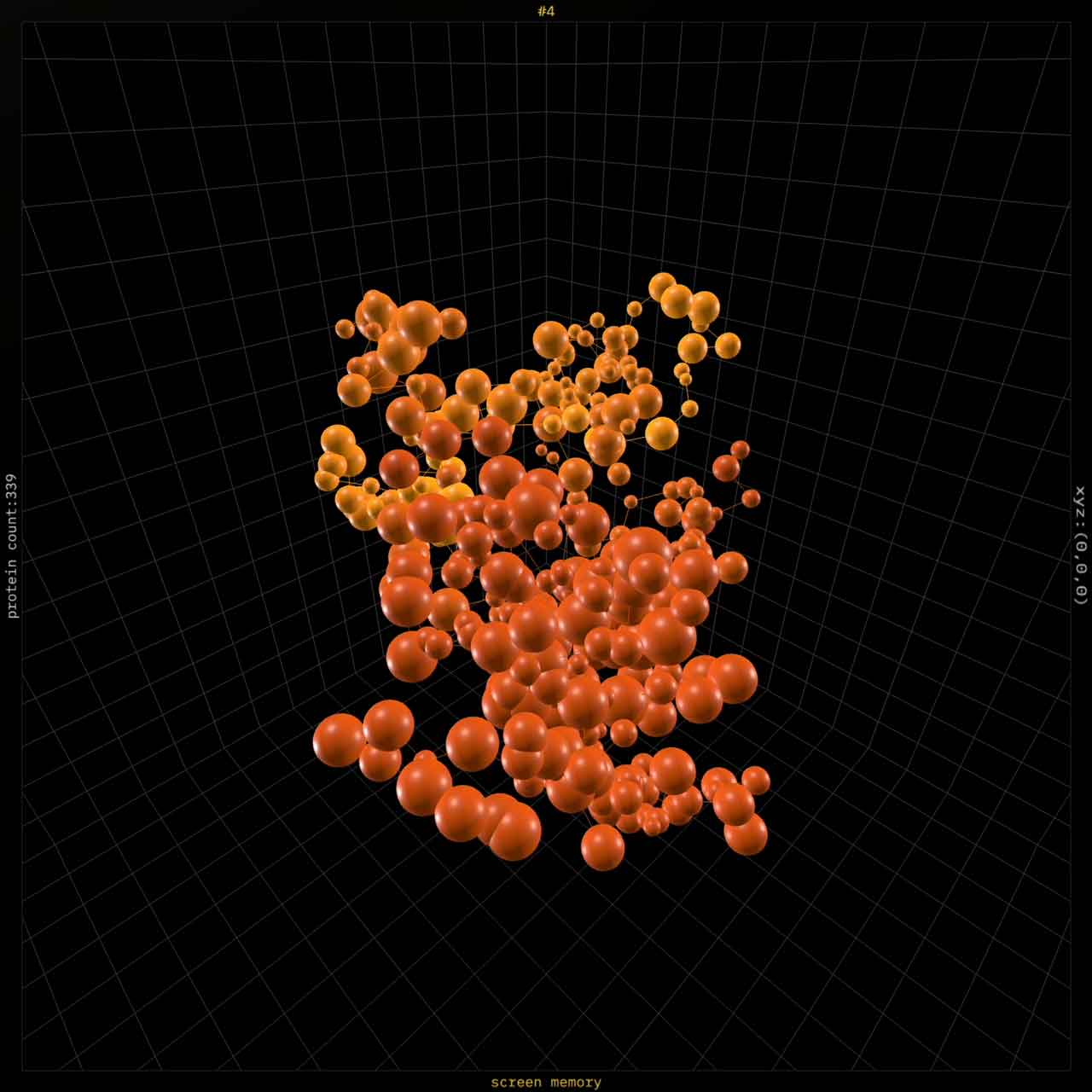
for example, a memory can be both joyful and sorrowful, both painful and sweet, simultaneously traumatic and nostalgic, and even funny. refer to freud’s theory of “screen memories” for further insight into this concept. (9)
color concept
- false memories are memory traces inclined towards remembering events that did not actually occur.
- symbolic memories involve meaningful traces in memory expressed through symbols, metaphors, or symbolic representations.
- reconstructive memory is a memory process where gaps in information are tended to be filled in when recalling past events.
- screen memories indicate the tendency to replace a real, often traumatic memory with a more pleasant or tolerable one.
- unconscious memories refer to traces in memory that individuals do not consciously recall but nonetheless influence their behaviors and thoughts.
- cryptomnesia occurs when an individual perceives others’ ideas, thoughts, or works as their own creation.
- silver gray: source amnesia refers to the inability to remember the source of certain information in memory.
- gold: gold moments, like precious treasures, sparkle with the brilliance of cherished moments, forever engraved in the tapestry of our hearts, radiating warmth and nostalgia.
- digital mixed colors: memories of AI unfold like a digital tapestry, woven with the threads of artificial intelligence, creating a mosaic of experiences that shape our technological journey.
- 420: hemp delicately weaves through the canvas of your memories, infusing them with the subtle hues of a hazy recollection.
- acid: acid dances with the threads of your memories, painting kaleidoscopic patterns on the canvas of your consciousness.
- charlie: white, it pulverizes the tapestry of your memories into ephemeral dust, leaving behind the echoes of forgotten moments.
%78 mixed colors: the collection utilizes random mixed colors from the color library. common elements represent not a specific type of memory but, like in our general memories, a combination of multiple memories. this, in turn, signifies the expression of various emotional states and feelings within a single memory.
technical details and code structure
“memorotein” is constructed upon a proprietary algorithm crafted using the javascript programming language. this algorithm governs the stochastic movements and visual configuration of the spheres. the code, structured according to object-oriented programming principles, treats each sphere as an autonomous entity.
the potential impacts and contributions
firstly, it innovatively bridges the gap between neuroscience and digital art, providing a unique perspective on how memories are encoded, recalled and recreated. this project not only enhances common understanding of memory processes but also contributes to the fields of digital art and NFTs by exploring new forms of artistic expression. furthermore, it raises awareness about the intricate connections between memory, cognition, and art, potentially influencing future research and creative endeavors in these areas.
conclusion
memorotein artistically conveys the mysteries of memories hidden within the human brain’s labyrinth. it creates generative memory protein forms from infinite possibilities, continually evolving designs through a three.js library-based algorithm. this project visually and interactively represents the biological foundations and psychological interactions of memories.